Regulations for ABSA Fourth Class Power Engineering tests

ABSA requires two tests for its 4th Class Power Engineering certificate (Part A & Part B), with each test consisting of 150 questions.

Of these 150 questions, roughly 10 are regulation-related. While test-takers are not required to know the regulations chapter and verse, they are expected to be able to consult them correctly during the exam.

Test candidates are permitted to bring the following regulatory resources into the exam room:

Safety Codes Act: Revised Statutes of Alberta 2000 (Chapter S-1)

Safety Codes Act: Power Engineers Regulation
Safety Codes Act: Pressure Welders Regulation

Safety Codes Act: Pressure Equipment Safety Regulation

In addition, candidates may also use:

  • CSA B-51: Boiler, Pressure Vessel and Pressure Piping Code
  • CSA B-52: Mechanical Refrigeration Code

An extract of these two codes is available from Pan Global for roughly $84.

Those taking the test may highlight and add tabs to these regulations prior to the exam, but are prohibited from writing in them.

(A small number of these resources is usually available in the exam room for common use, but depending on these leaves the candidate at the mercy of everyone else attempting to read them at the same time!)


Postscript: To keep all the pages together, consider getting each of these spirally-bound at a copy shop. It costs about $18 to get the first four sets of regulations bound separately at Staples.


UPDATE (September 29/2014): Other links to the first four materials:

Safety Codes Act: Revised Statutes of Alberta 2000 (Chapter S-1)

Safety Codes Act: Power Engineers Regulation

Safety Codes Act: Pressure Welders Regulation

Safety Codes Act: Pressure Equipment Safety Regulation

Sisson Centrifugal Pump operation

[Special thanks to Instructor Dale Nelson for reviewing this set of procedures and clearing up some misconceptions I had.]

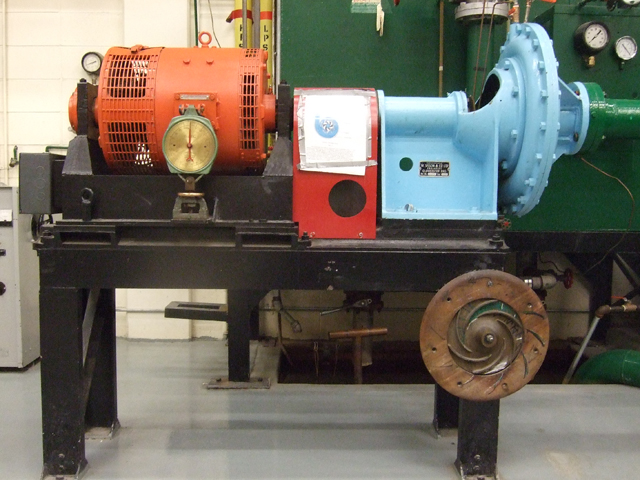
This post outlines how to start & stop the Sisson Centrifugal Pump setup in SAIT’s power engineering lab.

Photo of Sisson centrifugal pump

Sisson centrifugal pump

These procedures are currently correct (as of October 3, 2014), but may be subject to change in the future.

Preliminaries

  1. Open suction line. (If this is not done, the bronze impeller could be damaged from cavitation.)

    Suction valve

    Ratchet butterfly valve on suction line (shown Open)

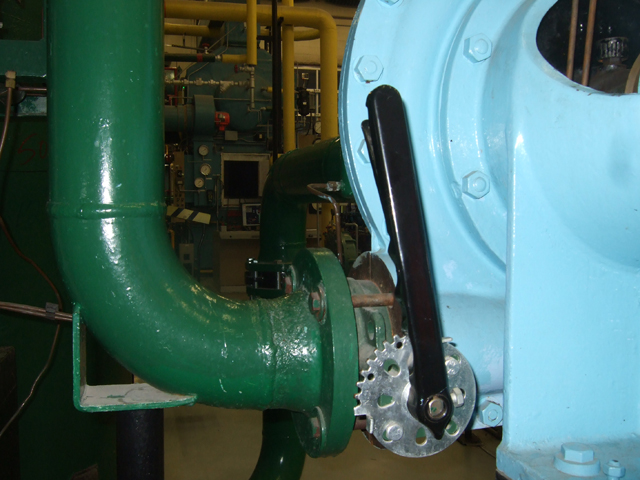
  2. Close discharge line.

    Ratchet butterfly valve on discharge line

    Ratchet butterfly valve on discharge line (shown Closed)

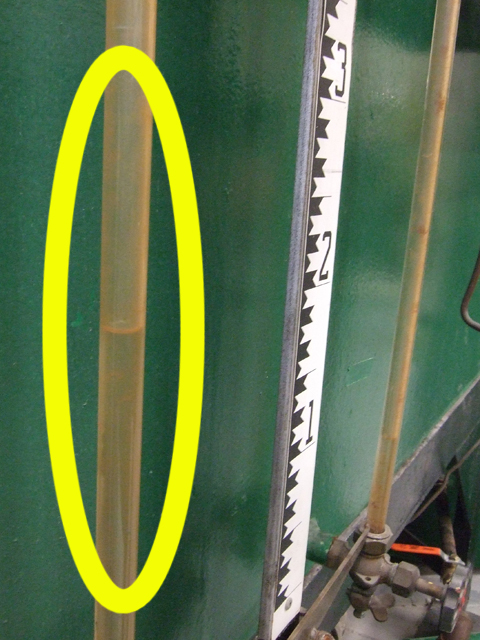
  3. Check sight glass on the receiving tank. (The receiving tank should not be too full, or it could overflow).

    Sight glass (circled in yellow)

    Sight glass (circled in yellow)

  4. Check water level in the source pit. (The pit should be 2/3 – 3/4 full. Fill if necessary by opening the valve on the receiving tank).
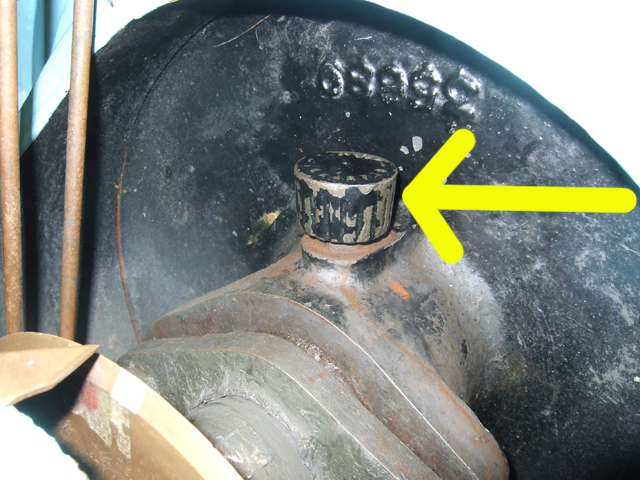
  5. Check pump motor lubrication. (The lubrication nipple should have grease filled to the top). Loosen & tighten cap by hand.

    Lubrication nipple (shown with cap on)

    Lubrication nipple (shown with cap on)

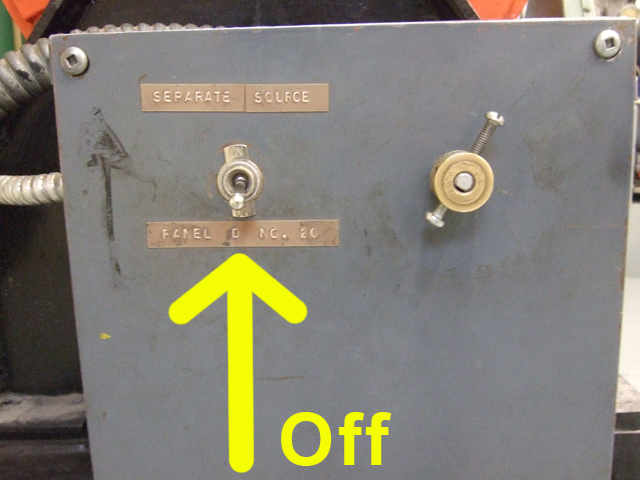
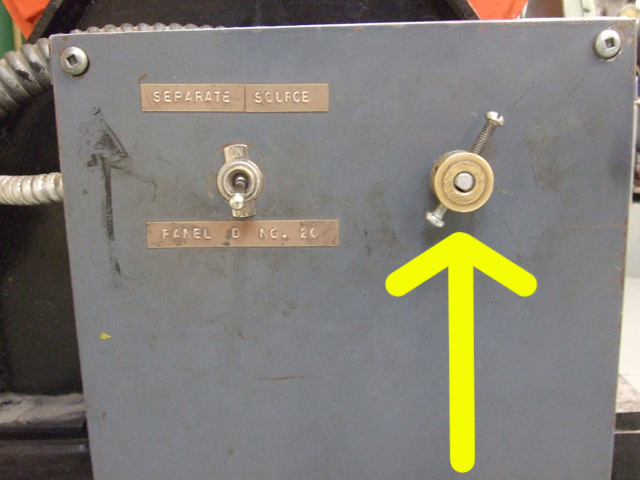
  6. Check that the fan trim switch on the pump casing is Off.

    Fan trim switch

    Fan trim switch

  7. Set long arm of motor trim dial on the pump casing to the 2 o’clock position.

    Trim dial to the 2 o'clock position (this looks more like the 1 o'clock position)

    Trim dial to the 2 o’clock position (although this looks more like the 1 o’clock position!)

  8. Check rectifier:

    DC rectifier

    DC rectifier

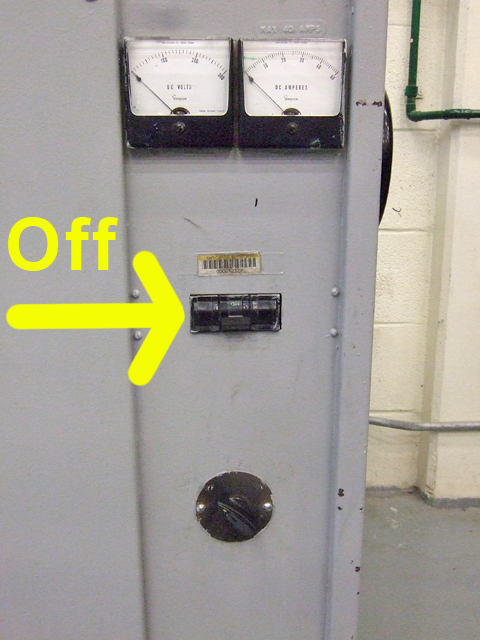
    1. Rectifier control switch should be Off.
    2. Rectifier fan should be Off.
    3. Rectifier rheostat should be at 0.
  9. Check that Disconnect #2 switch is Off (ie: in the middle position).
  10. Check that Disconnect #1 (DC Rectifier & Pump switch) is in the 0 (lower) position.
  11. Check fuse box for Fuse #40. The rectifier fuse should be in the On position (flipped to the left).
  12. Prepare to close Disconnect #1 (DC Rectifier & Pump switch):
    1. Stand to the side of the switch panel and do not cross in front of it.
    2. Grip switch with non-dominant hand while looking away.
    3. Take a deep breath and hold breath.
    4. Flip switch DOWN while gripping locking mechanism.
    5. Release locking mechanism.
    6. All this is necessary in case arcing blows door off knife switch case (causing potential eye & hand damage).
  13. Prepare to close Disconnect #2:
    1. Stand to the side of the switch panel and do not cross in front of it.
    2. Grip switch with non-dominant hand while looking away.
    3. Take a deep breath and hold breath.
    4. Disengage locking mechanism and flip switch DOWN.
    5. Release locking mechanism.
  14. Turn on the rectifier fan.
  15. Turn on the rectifier.
  16. Turn on the trim fan switch on the pump casing.
  17. Use back of hand to check if rectifier fan is blowing.

Priming the pump

  1. Turn on small priming water valve slowly.
  2. Open discharge valve slowly.
  3. Open primer air vents until only water emerges from tubes.
  4. Close primer air vents.
  5. Close discharge valve slowly.
  6. Turn off small priming water valve slowly.

Bring pump up to speed

  1. Turn rheostat on rectifier up to 60.
  2. Open discharge valve.
  3. Turn up rheostat on rectifier to 80.
  4. Open valve from receiving tank to source pit so that water level in the pit is kept even.
  5. Test heat on motor casing with BACK OF HAND so hand will reflexively jerk away from the metal if it is energized from a short-circuit.

Shutdown

  1. Turn rheostat on rectifier down to 30.
  2. Close valve from the receiving tank to the source pit.
  3. Close pump discharge valve.
  4. Turn rectifier rheostat to 0.
  5. Check rectifier rheostat fan with back of hand.
  6. Turn off trim fan switch on pump casing.
  7. Turn off rectifier control switch.
  8. Turn off rectifier fan switch.
  9. Prepare to OPEN Disconnect #2:
    1. Stand to the side of the switch panel and do not cross in front of it.
    2. Grip switch with non-dominant hand while looking away.
    3. Take a deep breath and hold breath.
    4. Disengage locking mechanism and flip switch UP. It should rest at the center position.
    5. Release locking mechanism.
  10. Prepare to OPEN Disconnect #1 (DC Rectifier & Pump switch):
    1. Stand to the side of the switch panel and do not cross in front of it.
    2. Grip switch with non-dominant hand while looking away.
    3. Take a deep breath and hold breath.
    4. Disengage locking mechanism and flip switch DOWN. It should rest at the 0 position.

      Rectifier control and fan switch.

      Rectifier control and fan switch

    5. Release locking mechanism.

[print-me]